
PEMBROKE — The Lumbee Tribal Council approved an ordinance on Thursday that declares clean drinking water as a fundamental right for the Lumbee people, and the people will soon have a chance to affirm that right in a referendum.
The ordinance, titled the Lumbee Tribe Clean Water Fundamental Right Declaration, was approved unanimously upon the motion of Councilwoman Rubalena Locklear, seconded by Councilman Billy Oxendine.
Article XII of the Lumbee Tribal Constitution states that any ordinance affecting fundamental rights passed by Tribal Council is to be certified for referendum by the Tribal chairperson within 10 days of its approval by the board. Since the Tribal Constitution went into effect in 2001, this is the first fundamental right that has been approved by Tribal Council, said Joshua Malcolm, the Tribe’s general counsel.
“Our people deserve clean water, so I want to know if the members feel that way, because they have been asking and demanding for that. This is our way to acknowledge that and say that we hear you,” Tribal Speaker Alex Baker said. “(The ordinance) affirms that protecting our river is not simply an environmental issue; this is about protecting our people, our heritage and our future.”
Tribal Council approved a resolution on Aug. 20 which demanded immediate action to find solutions for PFAS contamination in tribal territory to protect both members of the Lumbee Tribe and the general public. This ordinance furthers that commitment, establishing a sovereign clean water mandate for the Lumbee people, the ordinance says.
“The Lumbee Tribe hereby declares that clean water is a constitutionally protected fundamental right of the Lumbee people,” said Councilman Harold Smith, reading from the ordinance. “Present and future generations have the right to expect their tribal government to exercise its lawful and sovereign authority to prevent, reduce, monitor and respond to pollution and the threat to human health in their drinking water.”
The ordinance states that Tribal Council shall, within 180 days of the date of enactment, adopt further legislation necessary to carry out the fundamental right to clean water that the ordinance establishes. This will include efforts to “advance the source of identification, testing, public notice, exposure reduction, emergency assistance, enforcement funding and accountability goals previously demanded by Tribal Council,” Baker said, reading from the ordinance.
Additionally, the ordinance states that protecting clean water and creating economic development are “not opposing goals,” but that clean water protection can happen alongside development opportunities such as housing, agriculture, infrastructure, etc.
The ordinance text contains several references to the Lumber River —formally known by the Tribe as the Lumbee River, per 2009 statute — stating that it has been “a part of life, cultural homeland and the identity of our Lumbee people” throughout history. However, Malcolm told the Council that he was particular to not be specific to just include the Lumber River as he wrote the ordinance, as many other bodies of water and aquifers are part of tribal territory and have been affected by PFAS contamination.
As the ordinance was discussed before its approval, Malcolm told the council that this will result in a “fundamentally different approach,” with a requirement that clean water, as a fundamental right, is a consideration in any and all tribal decisions moving forward.
“You all are directing through law, and not just you all but the tribal administration on a go-forward basis if this is adopted, for every policy decision, programmatic decision that’s made, they’re going to have to consider and contemplate clean water,” Malcolm said.
Malcolm also said that the assertion that clean water is a fundamental right is not a universally held view among other sovereigns, citing a recent decision by the U.S. Court of Appeals’ Fifth Circuit, which has jurisdiction in Texas, Louisiana and Mississippi, that clean drinking water is not a constitutional right.
While Malcolm said he determined the Tribe is “not mature enough” to establish standards through its ordinance, the ordinance will “put all these other sovereigns on notice,” including local county and municipal governments.
Water contamination has been an ongoing issue facing the Robeson County government over multiple years. This includes, but may not be limited to, an area surrounding the Robeson County Landfill, including the Rocco Water Treatment Plant, with PFAS levels far higher than any recommended levels.
Robeson County, the City of Lumberton and Cumberland County, all within tribal territory, were among the 11 local governmental entities, along with the state, that were part of a $455 million settlement with Chemours, DuPont and Corteva that was announced last week related to PFAS contamination from the Fayetteville Works facility, located in Bladen County just across the Robeson County line. Robeson County and the City of Lumberton each plan to use the funds obtained through the settlement to install filtration systems to mitigate the issue.
Tribal Council approves $6.6M in grant funding
In other business, the board approved grant funding for 16 different programs for the new fiscal year, which begins Oct. 1, totaling $6.6 million.
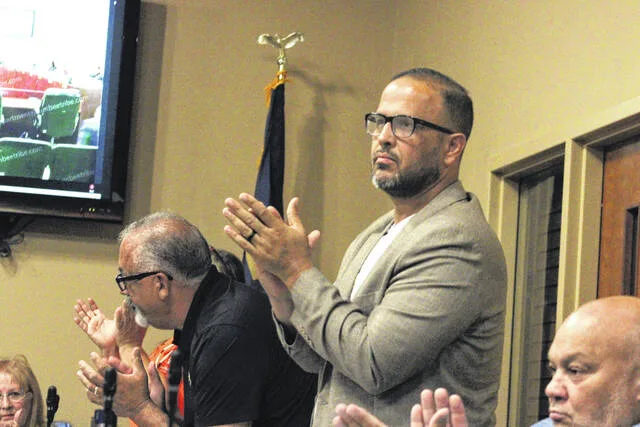
“I think that is excellent what we’ve done, and it’s been approved and I think we’ve done awesome,” said Councilwoman Nanci Locklear, chair of the council’s Finance Committee. “I think we can go ahead and clap for that.”
Baker also thanked Tribal staff for their work in helping to secure the various funding opportunities.
“We sit here and we adopt the budget, we set priorities, but our staff, these grant writers and our staff, they’ve really gone after this,” Baker said. “Thank you for prioritizing, hearing our concerns, and bringing us $6.6 million to address these concerns.”
This funding includes:
— $4,607,996 for the Indian Housing Block Grant, funded by the U.S. Department of Housing and Urban Development, for the creation of nine duplexes in Rennert specifically for low-income Lumbee elders.
— $1.81 million for the NIH iCRISP budget.
— $381,545.85 for the Strengthening Tribal Education Partnerships (STEP) Budget.
— $311,845 for the Youth Resilience, Identity, Strength & Empowerment (Youth-Rise) Budget, which is the first year of a five-year funding period for a U.S. Department of Health and Human Services program for substance use and mental health services.
— $241,595.28 for the Strengthening Native Producer Access through a Tribally Governed Intertribal Food System Budget.
— $230,000 for the Indian Child Welfare Act (ICWA) Program Budget, a Healthy Blue Funding award.
— $50,000 for the Lumbee Tribe Harm Reduction Budget, from the N.C. Department of Health and Human Services, for programs supporting Lumbee individuals and families affected by substance use disorder.
— $20,000 each for seven Boys & Girls Club locations operated by the Tribe.
— $15,000 for the Transportation Services Budget.
— $10,000 from the Duke Energy Foundation to support vocational rehab.
Tribal Council also approved a $5 million Good Neighbor Agreement with the U.S. Department of Agriculture, which will allow Lumbee Tribal Holdings to carry out contract work with the department.
The board also passed a continuing resolution which will keep the Tribal government functioning through the month of October, which was necessary as Tribal Council has not yet approved the budget for the 2026-27 fiscal year, which begins Oct. 1.
Lumbee Indian Child Welfare Act
Council also approved the Lumbee Indian Child Welfare Act, which will give the Tribe authority in custody decisions involving foster care placements, adoption placements, guardianships, etc., for Lumbee children.
“The creation of a Lumbee Child Welfare Act law will strengthen the Tribe’s ability to protect Lumbee children, the preservation of Lumbee families, build kinship and foster care resources,” said Councilman Jody Bullard, chair of the council’s Health and Human Services Committee, reading from the ordinance.
This comes as the Tribe falls under the Indian Child Welfare Act following its full federal recognition in Dec. 2025.
“It strengthens the Tribe’s voice in child welfare proceedings while helping preserve family connections, cultural identity and our children’s place within the Lumbee people,” Baker said. “Federal recognition opened the door, and tonight, council, you just took responsibility and walked through it.”
Other matters
In other business:
— Interim Tribal Administrator Ronnie Locklear invited the public to attend the Dance of the Harvest Moon Powwow, which runs Friday, Sept. 25 through Sunday, Sept. 27 at the Lumbee Tribe Cultural Center in Maxton. The Tribe also has a 5k run and walk and a fish fry, both on Saturday, Oct. 3, and its monthly farmer’s market this Saturday from 8 a.m. to 1 p.m.
— Rubalena Locklear invited the public to attend Project CREATE’s STEM Day on Saturday from 10 a.m. to 2 p.m. at the Cultural Center, and applauded Spencer Oxendine for becoming the first Lumbee to play in a PGA Tour event this week in Asheville.
— Ronnie Locklear also said that Tribal Chairman John Lowery has asked him to explore the feasibility of building a new administrative building and what the Tribe would be able to afford.
— Councilman Rudy Locklear asked Ronnie Locklear to consult with the chairman about the possibility of him being nominated for the full-time Tribal Administrator position. Ronnie Locklear has served in the role on an interim basis for nine months.
— Tribal Vice Chair Bobby Emanuel gave a brief update on the Tribe’s Election Board, saying that it is in the process of transitioning from a manual voting process to a digital process, and will do some dry runs leading up to the Nov. 17 Tribal election. He commended the board for their work in this transition.
— Baker said he had hoped for more turnout at the first of the Tribe’s public hearings on a proposed gaming ordinance, held Saturday in Scotland County, but that there were two “really good” speakers and there was some good discussion and “camaraderie” at the event. Three more public hearings remain: Sept. 22 in Red Springs (Hoke County), Sept. 24 in Fayetteville (Cumberland County) and Sept. 28 at the Pembroke Boys & Girls Club (Robeson County).
— Council heard a presentation from Corbin Eddings, who represents the Tribe in the United Tribes of North Carolina and is currently president of the organization’s Board of Directors. UTNC gave out 18 scholarships of $1,000 to Native American youth in the last year; 13 of these went to Lumbees. Councilman Larry Chavis donated $1,000 out of his community funds for a scholarship.
— Providers Brooke Grooms and Allison Scott from the newly opened Medicine Waters clinic were introduced. The clinic offers primary care and urgent care.
— The board appointed Sunsarae Harrell to the N.C. Indian Housing Authority for a five-year term.